
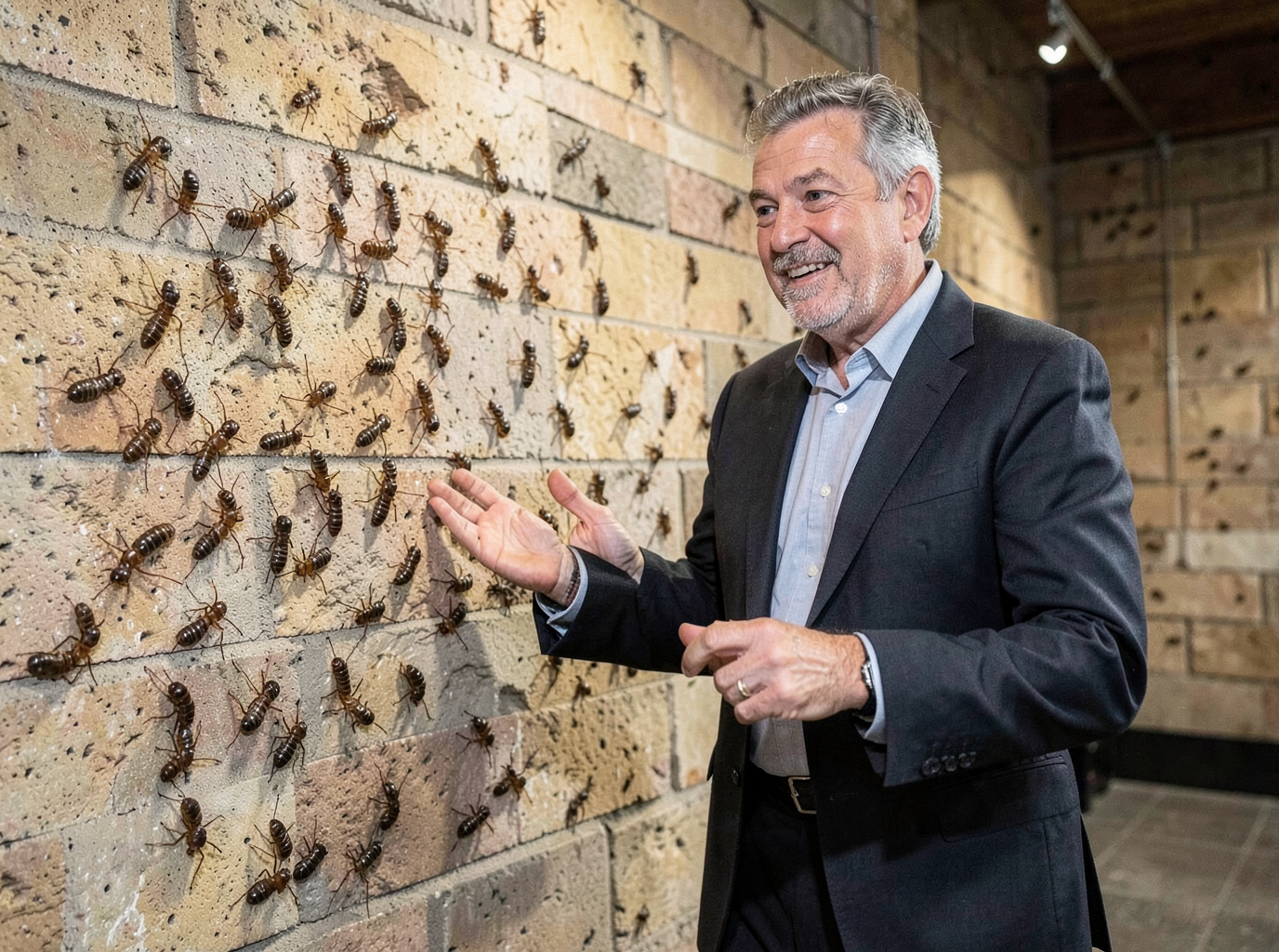
Homes in 78254 often feature slab-on-grade construction with wood framing that sits directly on concrete. Subterranean termites move from soil into wall voids through expansion joints and plumbing penetrations, especially after spring rains soften the clay-heavy soil. Once inside, they follow base plates and travel upward behind drywall or exterior sheathing without visible signs until damage appears near outlets or baseboards.
Drywood termites also appear in older sections of the neighborhood where cedar or pine trim was used. These colonies stay contained within single wall cavities for years, producing small fecal pellets that collect on window sills or along baseboards. Treatment requires drilling into the void at multiple heights and applying localized bait or foam, because whole-structure fumigation is rarely needed when activity is limited to one or two walls.
Moisture from leaking irrigation lines or poor grading around the foundation increases risk. In 78254 subdivisions built after 2000, many homes have stucco or brick veneer that traps humidity against the sheathing, creating ideal conditions for termites to remain active year-round. Regular monitoring with in-wall stations helps catch new activity before it spreads to adjacent rooms or load-bearing studs.
Technician insight
In San Antonio 78254 the thing that catches most people out with termites in walls is the combination of clay soil and slab foundations from the late 90s and early 2000s subdivisions. Termites follow plumbing penetrations straight up into the base plate and you can treat the void for weeks before realizing the colony is still feeding from the exterior grade that settled against the stucco.
Hidden Activity Behind Master Bedroom Wall
Homeowner noticed small pellets on the windowsill in a 78254 subdivision near Helotes Road. Inspection found drywood termites inside a single wall cavity connected to the window frame. Foam was injected at three heights and bait stations placed; follow-up confirmed no new activity and the wall was left intact.
Termites in Walls Services We Offer
✓Wall Void Inspections
Use moisture meters and borescopes to locate termite galleries behind drywall and sheathing in San Antonio 78254 homes without removing large sections of wall.
✓Targeted Wall Foam Treatments
Inject termiticide foam directly into infested wall cavities to reach galleries along base plates and vertical studs common in local slab homes.
✓Drywood Termite Baiting in Walls
Place slow-acting baits inside drilled access points so foraging drywood termites carry material back to the colony hidden within framing.
✓Foundation Perimeter Barriers
Apply liquid termiticide along the exterior slab edge and expansion joints to stop new subterranean termites from entering wall voids from the soil.
✓Damaged Wall Framing Repairs
Remove and replace structurally compromised studs and base plates after termite activity is eliminated, then treat the replacement lumber.
Termites in Walls Cost in San Antonio 78254, TX
| Service | Typical Range | What Affects It |
|---|---|---|
| Wall Void Inspection | $75–$150 | Price rises if multiple rooms or second-story walls require access. |
| Targeted Wall Treatment | $350–$850 | Depends on number of cavities treated and whether foam or bait is used. |
| Perimeter Barrier Add-On | $400–$700 | Added when soil-to-wall entry points are confirmed around the slab. |
| Follow-Up Monitoring Visit | $95–$175 | Covers station checks and any spot re-treatment needed. |
Ranges are typical for San Antonio 78254, TX and confirmed with an exact written quote before any work starts.
How it works
- 1
Initial Wall Assessment
Technician inspects interior and exterior walls for mud tubes, pellets, and moisture issues around the 78254 property.
- 2
Void Mapping
Small inspection holes are drilled and a borescope is used to trace gallery locations within the wall cavities.
- 3
Targeted Application
Foam or bait is injected at strategic points to reach active termites while minimizing disruption to finished surfaces.
- 4
Follow-Up Monitoring
Stations are placed and scheduled checks confirm colony elimination before any wall repairs are completed.
Pricing
Most wall-specific treatments fall between inspection and full-structure pricing because work stays localized.